
Shaping future electronics engineers through innovation, sustainability, and cutting-edge research





ASSISTANT PROFESSOR

ASSISTANT PROFESSOR
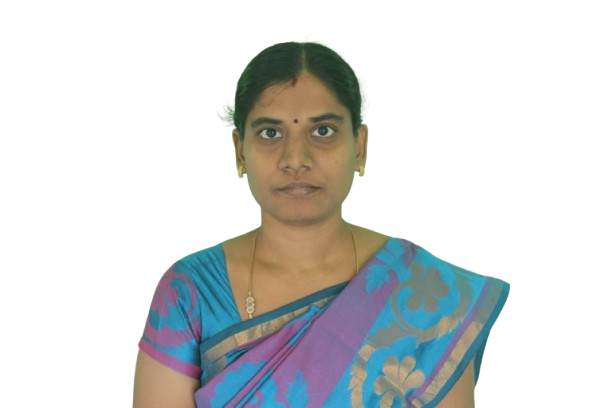
ASSISTANT PROFESSOR

HOD & Assistant Professor

Assistant Professor

Assistant Professor

Assistant Professor

Assistant Professor
Assistant Professor
Assistant Professor
Professor(M.E - VLSI Design)
Assistant Professor(M.E - VLSI Design)
Assistant Professor(M.E - VLSI)
The laboratory provides exposure to software-defined radio (SDR) platforms, multiple wireless communication protocols, and research-driven problem statements, encouraging innovation beyond conventional system designs. Laboratory exercises are structured to enable students to design, assemble, test, and evaluate communication system building blocks. The initial phase of the laboratory employs an optical bench configuration using advanced fiber-optic training systems to analyze parameters such as numerical aperture, signal attenuation, and transmission losses. The second phase utilizes enhanced fiber-optic trainer platforms for conducting computer-to-computer data transmission, bit error rate (BER) analysis, and pulse dispersion studies. The final phase incorporates a microwave test bench setup operating in the X-band frequency range, enabling the examination of propagation modes and electrical (V–I) characteristics of microwave active and passive components.
This laboratory was established in the year 2013. This laboratory enriches the fundamentals related to Analog and Digital Communication Systems. The main objective of this lab is to gain the practical hands-on experience by exposing the students to various modulation & demodulation techniques. The students will have an understanding of the concepts involved in transmission and reception of the signals in communication. Communication Lab allows the students to visualize the effects of sampling and TDM. It inculcates the students to implement AM & FM modulation and demodulation, PCM, DM, FSK, PSK, and DPSK schemes, equalization algorithms and error control coding schemes. The students will have an understanding of the concepts involved in transmission and reception of the signals in communication. This laboratory is completely sophisticated with all basic and latest equipment for doing all experiments which will meet the syllabus of Anna University.
The Embedded Systems Laboratory facilitates the development of student competency in the architecture, coding, and hardware–software integration of diverse processors and microcontroller platforms. The infrastructure and resources available in this laboratory support academic projects and promote learning aligned with emerging technologies and industry trends. Students acquire foundational knowledge of computer organization, develop C-based application programs for peripheral control and input/output operations, implement basic data handling techniques, perform numeric processing in different representations, and understand the utilization of static memory for persistent data storage and stack memory for temporary data handling.
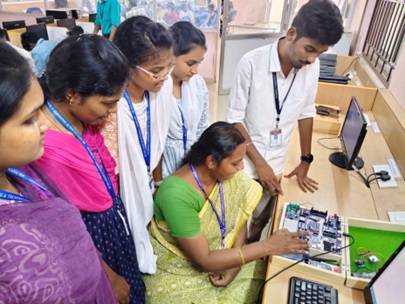
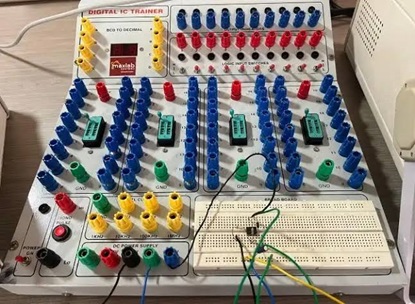
This laboratory serves as an introductory platform for students to enter the field of electronics. The extensive experience and expertise of the faculty help students gain a strong understanding of electronic concepts. A key feature of this laboratory is that it encourages hands-on experimentation with various electronic components and instruments under proper guidance. This practical exposure stimulates students’ interest to explore beyond theoretical learning. The laboratory is carefully planned to help students analyze the characteristics of different electronic devices, providing a solid foundation during the initial years of study. By the end of the semester, students are capable of designing and testing basic electronic circuits. Students are also motivated to undertake mini-projects, with necessary components made available to support their learning.
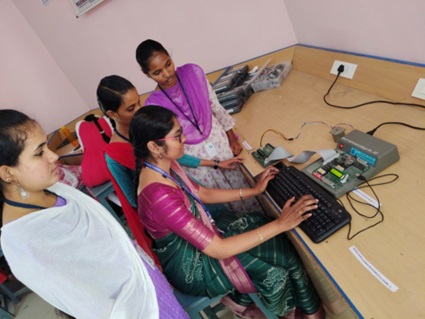
The laboratory is equipped with a variety of microprocessor and microcontroller development kits and interfacing boards, which provide extensive practical exposure. These resources help students comprehend the internal functional blocks of processors and controllers and develop integrated hardware–software solutions for real-time applications. Students receive structured training in serial communication protocols using processor/controller development platforms. They also gain experience in interfacing processors with external modules including A/D converters, stepper motors, DC motors, LCD modules, and seven-segment display units.
The Optical and Microwave Laboratory is designed to impart comprehensive understanding of optical and microwave devices and subsystems, with emphasis on their analysis and practical implementation. The laboratory sessions enable students to design, assemble, and evaluate microwave and optical systems, strengthening their conceptual and experimental skills. The initial phase of the laboratory makes use of a microwave test bench, while the later phase employs an optical experimentation bench. Laboratory activities progress systematically from the study of fundamental properties of optical and microwave components to more advanced performance evaluations. The microwave section is equipped with X-band experimental setups, providing essential training in radio frequency and microwave engineering concepts. A horn antenna radiation pattern measurement facility is available to offer hands-on experience in antenna performance analysis.
The objective of the laboratory is to provide students with hands-on experience in the simulation and experimentation of digital signals and systems. The Digital Signal Processing Laboratory enables students to understand, analyze, and design signal processing techniques, thereby strengthening their core technical knowledge. This laboratory focuses on the representation of signals as discrete numerical sequences and the processing operations performed to extract useful information. Students gain practical exposure by implementing digital signal processing algorithms using various computational platforms and DSP tools, enhancing their analytical and problem-solving skills in signal processing applications.
Download the complete syllabus including course structure and learning outcomes.
Download SyllabusDownload the complete syllabus including course structure and learning outcomes.
Download SyllabusDownload the complete syllabus including course structure and learning outcomes.
Download SyllabusDownload the complete syllabus including course structure and learning outcomes.
Download Syllabusa. Quiz b. Z-A Approach c. Flipped Class room d. Jig Saw/ Reciprocal teaching e. Think Pair Share f. Interactive Lecture & Lab Demonstration g. Student seminar h. Mind mapping i. Industrial visit j. Team based Learning k. Suitable Analogies.

J.AROCKIA MARY, K.DEVADHARSHINI and S.ABINAYA of III year ECE has attended one week internship on BSNL, Virudhunagar.

MANJULA.M III year ECE has attended the undergone internship on EMBEDDED SYSTEM &IOT at CALIBER EMBEDDED Technologies India Pvt Ltd held on 15.12.2025 to 29.12.2025

II year ECE has attended in the one day seminar on GROWTH AND CHALLENGES FACED IN INDIAN SPACE AND DEFENCE held on SVCET on 20.02.2026

R.SARVESHWARI and G.ROHINI of III year ECE has attended the National Level Technical Symposium in OMNITRIX 2.0 2K25 at SVCET held on 12.09.2025

K.SEKAR and S.SANTHOSH KUMAR of III year ECE has attended in three day “Hands-on workshop on mastering in PCB Designing: A Practical Approach”

MANJULA.M III year ECE has participated in the state – level Quiz program conducted in connection with the Election Awareness Program for the 2024 Lok Sabha General Election.

J.AROCKIA MARY, K.DEVADHARSHINI and S.ABINAYA of III year ECE has attended one week internship on BSNL, Virudhunagar.

MANJULA.M III year ECE has attended the undergone internship on EMBEDDED SYSTEM &IOT at CALIBER EMBEDDED Technologies India Pvt Ltd held on 15.12.2025 to 29.12.2025

II year ECE has attended in the one day seminar on GROWTH AND CHALLENGES FACED IN INDIAN SPACE AND DEFENCE held on SVCET on 20.02.2026

R.SARVESHWARI and G.ROHINI of III year ECE has attended the National Level Technical Symposium in OMNITRIX 2.0 2K25 at SVCET held on 12.09.2025

K.SEKAR and S.SANTHOSH KUMAR of III year ECE has attended in three day “Hands-on workshop on mastering in PCB Designing: A Practical Approach”

MANJULA.M III year ECE has participated in the state – level Quiz program conducted in connection with the Election Awareness Program for the 2024 Lok Sabha General Election.
Faculty achievements will be updated soon.

Third International Conference on “Communication Computing & IOT”

One day Seminar on “Growth and Challenges Faced in Indian Space and Defense”
Third International Conference on “Communication Computing & IOT”
One day Seminar on “Growth and Challenges Faced in Indian Space and Defense”
Value added course information will be updated soon.
No MoU details available

Member

Member - IAENG-International Association of Engineers
Member
Member - IAENG-International Association of Engineers